
Insights of a Thoughtful Life 

Reflective thoughts, original poems and cultural commentary–posted weekly

“Thoughts That Stir the Mind and Steady the Heart”

Personal reflections on faith, life, and contemporary culture, written to encourage attentiveness, clarity, and thoughtful consideration

Has Our Pursuit of Safety Made Us More Afraid?

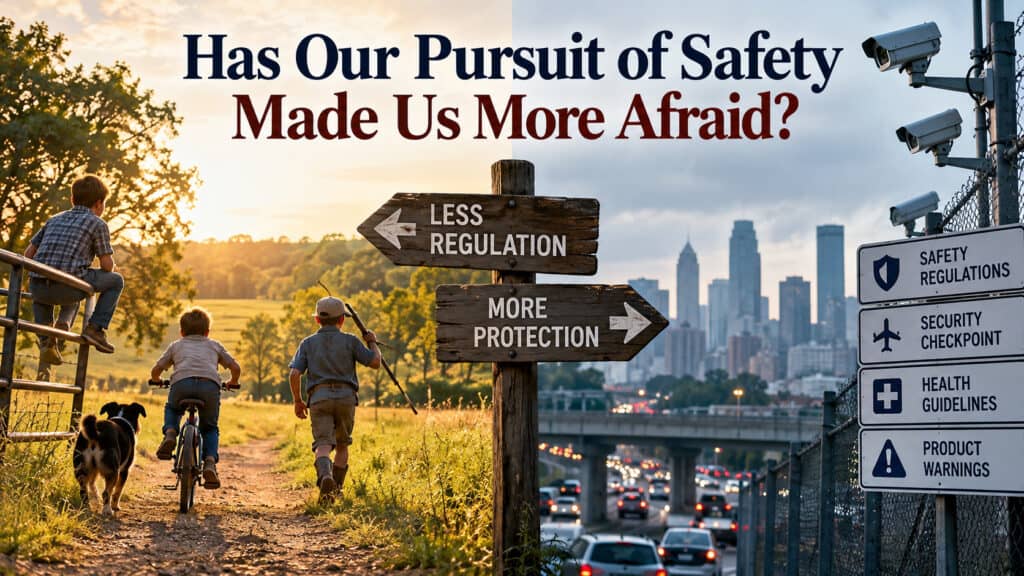
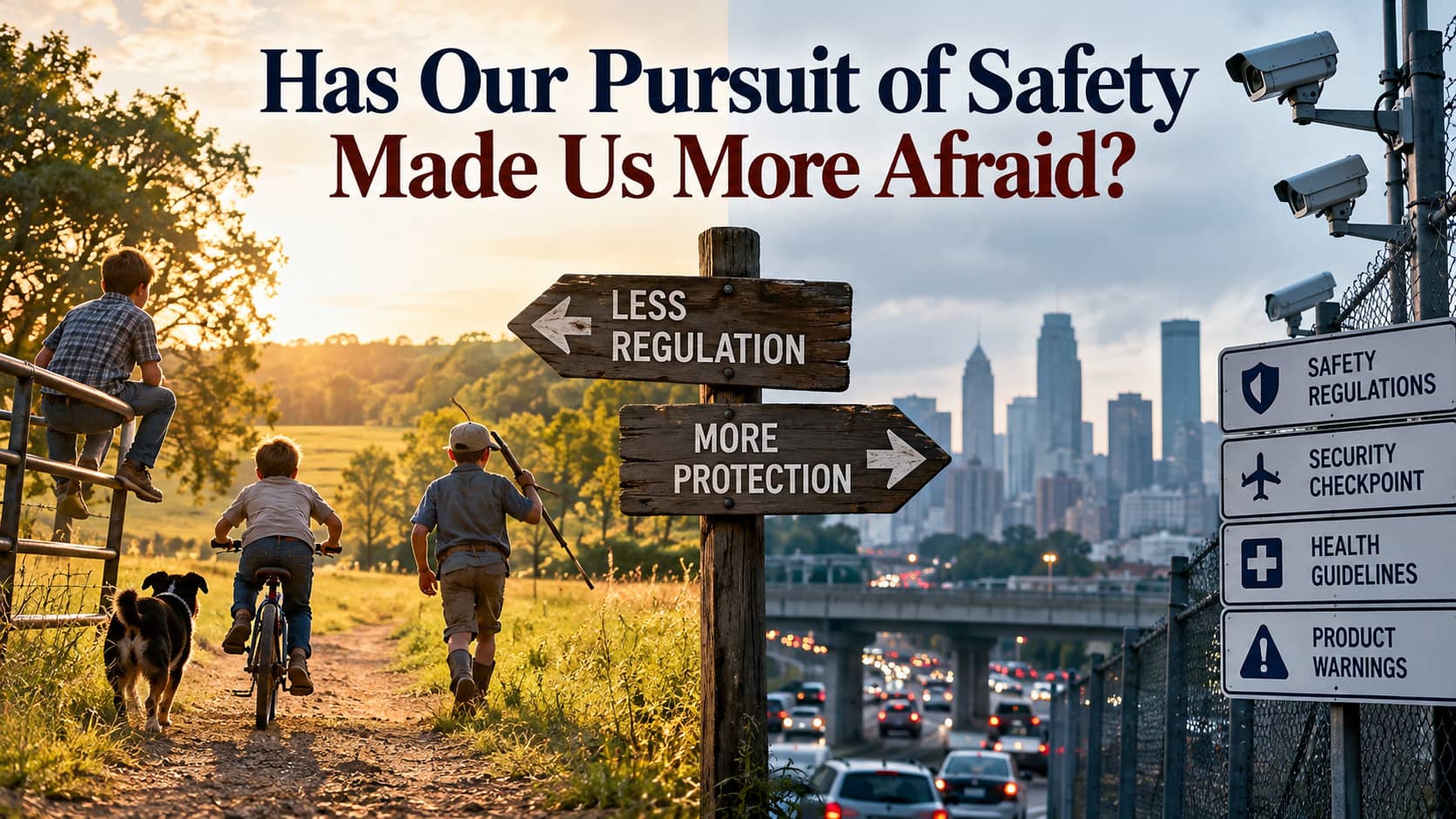
Have you ever considered whether our increasing efforts to make life safer have actually made us feel less secure? We have more laws, regulations, technology, and organizations designed to protect us from risks than previous generations imagined. Yet we continue to worry about our health, finances, relationships, and future. Has our pursuit of security increased our fears rather than reduced them? And what consequences might this have for our willingness to take risks, trust others, and practice our Christian faith?

Take a little walk-through olden times with me. Growing up, these activities were commonplace:

  • School playgrounds that had swings with wooden seats, merry-go-rounds, seesaws, and large metal slides placed on dirt or gravel areas.
  • No baby seats in cars, no seat belts, no airbags.
  • Riding on car fenders shooting rabbits or riding in the back of a pickup.
  • Hunting alone with a shotgun or .22 at age 12—I really think it was earlier.
  • Driving a team of horses pulling a hay rake at age 10.
  • Riding a bicycle without a helmet.

Until relatively recently, we did not have many of the laws or organizations now designed to protect us against risk:

  • No OSHA (Occupational Safety and Health Administration—created in 1970).
  • No Transportation Security Administration (reducing the risk of terrorist attacks).
  • No EPA (reducing risks from air and water pollution).
  • Less extensive labeling of food products (to reduce health risks).
  • Fewer controls on firearms and their purchase (intended to reduce certain risks).
  • No Consumer Product Safety Commission (reducing risks from consumer products).
  • No Dodd–Frank Wall Street Reform and Consumer Protection Act (intended to reduce financial-system risks).

Certainly, many of these changes have reduced injuries, deaths, and other serious consequences. The question is not whether reasonable protection is beneficial. Rather, has our increasing emphasis on eliminating risk also changed how we perceive danger and security?

Risk avoidance can also be equated with the fear of ………. you fill in the blank. I suggest that our risk-avoidance society may heighten some of our fears and make us feel insecure, even while providing greater physical and financial protection. We naturally fear what we cannot control and what appears to be an immediate threat.

A little reflection reveals that some of us, at times, feel insecure about finances, health issues, our relationships, our government’s direction, the impact of technology, and the rapid changes in our society.

Research in psychology indicates that insecurity and intolerance of uncertainty are associated with several behavioral consequences:

  • Avoiding risks that may actually be beneficial.
  • An increased need for control over circumstances and outcomes.
  • Reduced trust in unfamiliar people.
  • Resistance to change and unfamiliar situations.
  • Social withdrawal and avoidance of relationships involving vulnerability.

These consequences do not occur in everyone, nor is avoiding risk necessarily undesirable. Insecurity may also cause some people to take greater risks in an attempt to escape circumstances they consider threatening.

I was once taught that our responses to threats could be characterized as fight, flee, tremble, or solve responsibly. The appropriate response requires evaluating the actual threat, the probability and consequences of harm, and the possible courses of action.

In the last case, the response also depends on one’s worldview.

A secular worldview may evaluate risks and responses in terms of their consequences for individuals, other people, and society. A Christian worldview includes those considerations but also evaluates decisions in light of our relationship with God, His purposes, and our responsibilities to others.

This introduces another consideration. What happens when protecting our own security conflicts with what we believe God expects of us? Are we willing to accept personal risk when helping someone in need, developing relationships with unfamiliar people, or acting on our Christian convictions?

A question for future examination would be:

When does our desire for security cease to be prudent protection consistent with our faith and begin to prevent us from doing what we believe God expects of us?


 

Leave a Reply

Your email address will not be published. Required fields are marked *

Related Posts

Change

The operative word— Undoubtedly, CHANGE. Though usually uncomfortable, That’s the name of the game.   Change can be useful, Perhaps

Read More

Has Our Pursuit of Safety Made Us More Afraid?

Have you ever considered whether our increasing efforts to make life safer have actually made us feel less secure? We have more laws, regulations, technology, and organizations designed to protect us from risks than previous generations imagined. Yet we continue to worry about our health, finances, relationships, and future. Has our pursuit of security increased our fears rather than reduced them? And what consequences might this have for our willingness to take risks, trust others, and practice our Christian faith?

Take a little walk-through olden times with me. Growing up, these activities were commonplace:

  • School playgrounds that had swings with wooden seats, merry-go-rounds, seesaws, and large metal slides placed on dirt or gravel areas.
  • No baby seats in cars, no seat belts, no airbags.
  • Riding on car fenders shooting rabbits or riding in the back of a pickup.
  • Hunting alone with a shotgun or .22 at age 12—I really think it was earlier.
  • Driving a team of horses pulling a hay rake at age 10.
  • Riding a bicycle without a helmet.

Until relatively recently, we did not have many of the laws or organizations now designed to protect us against risk:

  • No OSHA (Occupational Safety and Health Administration—created in 1970).
  • No Transportation Security Administration (reducing the risk of terrorist attacks).
  • No EPA (reducing risks from air and water pollution).
  • Less extensive labeling of food products (to reduce health risks).
  • Fewer controls on firearms and their purchase (intended to reduce certain risks).
  • No Consumer Product Safety Commission (reducing risks from consumer products).
  • No Dodd–Frank Wall Street Reform and Consumer Protection Act (intended to reduce financial-system risks).

Certainly, many of these changes have reduced injuries, deaths, and other serious consequences. The question is not whether reasonable protection is beneficial. Rather, has our increasing emphasis on eliminating risk also changed how we perceive danger and security?

Risk avoidance can also be equated with the fear of ………. you fill in the blank. I suggest that our risk-avoidance society may heighten some of our fears and make us feel insecure, even while providing greater physical and financial protection. We naturally fear what we cannot control and what appears to be an immediate threat.

A little reflection reveals that some of us, at times, feel insecure about finances, health issues, our relationships, our government’s direction, the impact of technology, and the rapid changes in our society.

Research in psychology indicates that insecurity and intolerance of uncertainty are associated with several behavioral consequences:

  • Avoiding risks that may actually be beneficial.
  • An increased need for control over circumstances and outcomes.
  • Reduced trust in unfamiliar people.
  • Resistance to change and unfamiliar situations.
  • Social withdrawal and avoidance of relationships involving vulnerability.

These consequences do not occur in everyone, nor is avoiding risk necessarily undesirable. Insecurity may also cause some people to take greater risks in an attempt to escape circumstances they consider threatening.

I was once taught that our responses to threats could be characterized as fight, flee, tremble, or solve responsibly. The appropriate response requires evaluating the actual threat, the probability and consequences of harm, and the possible courses of action.

In the last case, the response also depends on one’s worldview.

A secular worldview may evaluate risks and responses in terms of their consequences for individuals, other people, and society. A Christian worldview includes those considerations but also evaluates decisions in light of our relationship with God, His purposes, and our responsibilities to others.

This introduces another consideration. What happens when protecting our own security conflicts with what we believe God expects of us? Are we willing to accept personal risk when helping someone in need, developing relationships with unfamiliar people, or acting on our Christian convictions?

A question for future examination would be:

When does our desire for security cease to be prudent protection consistent with our faith and begin to prevent us from doing what we believe God expects of us?
 

Share the Post:

Related Posts

Change

The operative word— Undoubtedly, CHANGE. Though usually uncomfortable, That’s the name of the game.   Change can be useful, Perhaps

Read More

Has Our Pursuit of Safety Made Us More Afraid?

Have you ever considered whether our increasing efforts to make life safer have actually made us feel less secure? We have more laws, regulations, technology, and organizations designed to protect us from risks than previous generations imagined. Yet we continue to worry about our health, finances, relationships, and future. Has our pursuit of security increased our fears rather than reduced them? And what consequences might this have for our willingness to take risks, trust others, and practice our Christian faith?

Take a little walk-through olden times with me. Growing up, these activities were commonplace:

  • School playgrounds that had swings with wooden seats, merry-go-rounds, seesaws, and large metal slides placed on dirt or gravel areas.
  • No baby seats in cars, no seat belts, no airbags.
  • Riding on car fenders shooting rabbits or riding in the back of a pickup.
  • Hunting alone with a shotgun or .22 at age 12—I really think it was earlier.
  • Driving a team of horses pulling a hay rake at age 10.
  • Riding a bicycle without a helmet.

Until relatively recently, we did not have many of the laws or organizations now designed to protect us against risk:

  • No OSHA (Occupational Safety and Health Administration—created in 1970).
  • No Transportation Security Administration (reducing the risk of terrorist attacks).
  • No EPA (reducing risks from air and water pollution).
  • Less extensive labeling of food products (to reduce health risks).
  • Fewer controls on firearms and their purchase (intended to reduce certain risks).
  • No Consumer Product Safety Commission (reducing risks from consumer products).
  • No Dodd–Frank Wall Street Reform and Consumer Protection Act (intended to reduce financial-system risks).

Certainly, many of these changes have reduced injuries, deaths, and other serious consequences. The question is not whether reasonable protection is beneficial. Rather, has our increasing emphasis on eliminating risk also changed how we perceive danger and security?

Risk avoidance can also be equated with the fear of ………. you fill in the blank. I suggest that our risk-avoidance society may heighten some of our fears and make us feel insecure, even while providing greater physical and financial protection. We naturally fear what we cannot control and what appears to be an immediate threat.

A little reflection reveals that some of us, at times, feel insecure about finances, health issues, our relationships, our government’s direction, the impact of technology, and the rapid changes in our society.

Research in psychology indicates that insecurity and intolerance of uncertainty are associated with several behavioral consequences:

  • Avoiding risks that may actually be beneficial.
  • An increased need for control over circumstances and outcomes.
  • Reduced trust in unfamiliar people.
  • Resistance to change and unfamiliar situations.
  • Social withdrawal and avoidance of relationships involving vulnerability.

These consequences do not occur in everyone, nor is avoiding risk necessarily undesirable. Insecurity may also cause some people to take greater risks in an attempt to escape circumstances they consider threatening.

I was once taught that our responses to threats could be characterized as fight, flee, tremble, or solve responsibly. The appropriate response requires evaluating the actual threat, the probability and consequences of harm, and the possible courses of action.

In the last case, the response also depends on one’s worldview.

A secular worldview may evaluate risks and responses in terms of their consequences for individuals, other people, and society. A Christian worldview includes those considerations but also evaluates decisions in light of our relationship with God, His purposes, and our responsibilities to others.

This introduces another consideration. What happens when protecting our own security conflicts with what we believe God expects of us? Are we willing to accept personal risk when helping someone in need, developing relationships with unfamiliar people, or acting on our Christian convictions?

A question for future examination would be:

When does our desire for security cease to be prudent protection consistent with our faith and begin to prevent us from doing what we believe God expects of us?
 

Share the Post:

Related Posts

Change

The operative word— Undoubtedly, CHANGE. Though usually uncomfortable, That’s the name of the game.   Change can be useful, Perhaps

Read More

“Thoughts That Stir the Mind and Steady the Heart”

Has Our Pursuit of Safety Made Us More Afraid?

Have you ever considered whether our increasing efforts to make life safer have actually made us feel less secure? We have more laws, regulations, technology, and organizations designed to protect us from risks than previous generations imagined. Yet we continue to worry about our health, finances, relationships, and future. Has our pursuit of security increased our fears rather than reduced them? And what consequences might this have for our willingness to take risks, trust others, and practice our Christian faith?

Take a little walk-through olden times with me. Growing up, these activities were commonplace:

  • School playgrounds that had swings with wooden seats, merry-go-rounds, seesaws, and large metal slides placed on dirt or gravel areas.
  • No baby seats in cars, no seat belts, no airbags.
  • Riding on car fenders shooting rabbits or riding in the back of a pickup.
  • Hunting alone with a shotgun or .22 at age 12—I really think it was earlier.
  • Driving a team of horses pulling a hay rake at age 10.
  • Riding a bicycle without a helmet.

Until relatively recently, we did not have many of the laws or organizations now designed to protect us against risk:

  • No OSHA (Occupational Safety and Health Administration—created in 1970).
  • No Transportation Security Administration (reducing the risk of terrorist attacks).
  • No EPA (reducing risks from air and water pollution).
  • Less extensive labeling of food products (to reduce health risks).
  • Fewer controls on firearms and their purchase (intended to reduce certain risks).
  • No Consumer Product Safety Commission (reducing risks from consumer products).
  • No Dodd–Frank Wall Street Reform and Consumer Protection Act (intended to reduce financial-system risks).

Certainly, many of these changes have reduced injuries, deaths, and other serious consequences. The question is not whether reasonable protection is beneficial. Rather, has our increasing emphasis on eliminating risk also changed how we perceive danger and security?

Risk avoidance can also be equated with the fear of ………. you fill in the blank. I suggest that our risk-avoidance society may heighten some of our fears and make us feel insecure, even while providing greater physical and financial protection. We naturally fear what we cannot control and what appears to be an immediate threat.

A little reflection reveals that some of us, at times, feel insecure about finances, health issues, our relationships, our government’s direction, the impact of technology, and the rapid changes in our society.

Research in psychology indicates that insecurity and intolerance of uncertainty are associated with several behavioral consequences:

  • Avoiding risks that may actually be beneficial.
  • An increased need for control over circumstances and outcomes.
  • Reduced trust in unfamiliar people.
  • Resistance to change and unfamiliar situations.
  • Social withdrawal and avoidance of relationships involving vulnerability.

These consequences do not occur in everyone, nor is avoiding risk necessarily undesirable. Insecurity may also cause some people to take greater risks in an attempt to escape circumstances they consider threatening.

I was once taught that our responses to threats could be characterized as fight, flee, tremble, or solve responsibly. The appropriate response requires evaluating the actual threat, the probability and consequences of harm, and the possible courses of action.

In the last case, the response also depends on one’s worldview.

A secular worldview may evaluate risks and responses in terms of their consequences for individuals, other people, and society. A Christian worldview includes those considerations but also evaluates decisions in light of our relationship with God, His purposes, and our responsibilities to others.

This introduces another consideration. What happens when protecting our own security conflicts with what we believe God expects of us? Are we willing to accept personal risk when helping someone in need, developing relationships with unfamiliar people, or acting on our Christian convictions?

A question for future examination would be:

When does our desire for security cease to be prudent protection consistent with our faith and begin to prevent us from doing what we believe God expects of us?


Share the Post:

Related Posts

Change

The operative word— Undoubtedly, CHANGE. Though usually uncomfortable, That’s the name of the game.   Change can be useful, Perhaps

Read More

Has Our Pursuit of Safety Made Us More Afraid?

Have you ever considered whether our increasing efforts to make life safer have actually made us feel less secure? We have more laws, regulations, technology, and organizations designed to protect us from risks than previous generations imagined. Yet we continue to worry about our health, finances, relationships, and future. Has our pursuit of security increased our fears rather than reduced them? And what consequences might this have for our willingness to take risks, trust others, and practice our Christian faith?

Take a little walk-through olden times with me. Growing up, these activities were commonplace:

  • School playgrounds that had swings with wooden seats, merry-go-rounds, seesaws, and large metal slides placed on dirt or gravel areas.
  • No baby seats in cars, no seat belts, no airbags.
  • Riding on car fenders shooting rabbits or riding in the back of a pickup.
  • Hunting alone with a shotgun or .22 at age 12—I really think it was earlier.
  • Driving a team of horses pulling a hay rake at age 10.
  • Riding a bicycle without a helmet.

Until relatively recently, we did not have many of the laws or organizations now designed to protect us against risk:

  • No OSHA (Occupational Safety and Health Administration—created in 1970).
  • No Transportation Security Administration (reducing the risk of terrorist attacks).
  • No EPA (reducing risks from air and water pollution).
  • Less extensive labeling of food products (to reduce health risks).
  • Fewer controls on firearms and their purchase (intended to reduce certain risks).
  • No Consumer Product Safety Commission (reducing risks from consumer products).
  • No Dodd–Frank Wall Street Reform and Consumer Protection Act (intended to reduce financial-system risks).

Certainly, many of these changes have reduced injuries, deaths, and other serious consequences. The question is not whether reasonable protection is beneficial. Rather, has our increasing emphasis on eliminating risk also changed how we perceive danger and security?

Risk avoidance can also be equated with the fear of ………. you fill in the blank. I suggest that our risk-avoidance society may heighten some of our fears and make us feel insecure, even while providing greater physical and financial protection. We naturally fear what we cannot control and what appears to be an immediate threat.

A little reflection reveals that some of us, at times, feel insecure about finances, health issues, our relationships, our government’s direction, the impact of technology, and the rapid changes in our society.

Research in psychology indicates that insecurity and intolerance of uncertainty are associated with several behavioral consequences:

  • Avoiding risks that may actually be beneficial.
  • An increased need for control over circumstances and outcomes.
  • Reduced trust in unfamiliar people.
  • Resistance to change and unfamiliar situations.
  • Social withdrawal and avoidance of relationships involving vulnerability.

These consequences do not occur in everyone, nor is avoiding risk necessarily undesirable. Insecurity may also cause some people to take greater risks in an attempt to escape circumstances they consider threatening.

I was once taught that our responses to threats could be characterized as fight, flee, tremble, or solve responsibly. The appropriate response requires evaluating the actual threat, the probability and consequences of harm, and the possible courses of action.

In the last case, the response also depends on one’s worldview.

A secular worldview may evaluate risks and responses in terms of their consequences for individuals, other people, and society. A Christian worldview includes those considerations but also evaluates decisions in light of our relationship with God, His purposes, and our responsibilities to others.

This introduces another consideration. What happens when protecting our own security conflicts with what we believe God expects of us? Are we willing to accept personal risk when helping someone in need, developing relationships with unfamiliar people, or acting on our Christian convictions?

A question for future examination would be:

When does our desire for security cease to be prudent protection consistent with our faith and begin to prevent us from doing what we believe God expects of us?


Share the Post:

Related Posts

Change

The operative word— Undoubtedly, CHANGE. Though usually uncomfortable, That’s the name of the game.   Change can be useful, Perhaps

Read More

Has Our Pursuit of Safety Made Us More Afraid?

Have you ever considered whether our increasing efforts to make life safer have actually made us feel less secure? We have more laws, regulations, technology, and organizations designed to protect us from risks than previous generations imagined. Yet we continue to worry about our health, finances, relationships, and future. Has our pursuit of security increased our fears rather than reduced them? And what consequences might this have for our willingness to take risks, trust others, and practice our Christian faith?

Take a little walk-through olden times with me. Growing up, these activities were commonplace:

  • School playgrounds that had swings with wooden seats, merry-go-rounds, seesaws, and large metal slides placed on dirt or gravel areas.
  • No baby seats in cars, no seat belts, no airbags.
  • Riding on car fenders shooting rabbits or riding in the back of a pickup.
  • Hunting alone with a shotgun or .22 at age 12—I really think it was earlier.
  • Driving a team of horses pulling a hay rake at age 10.
  • Riding a bicycle without a helmet.

Until relatively recently, we did not have many of the laws or organizations now designed to protect us against risk:

  • No OSHA (Occupational Safety and Health Administration—created in 1970).
  • No Transportation Security Administration (reducing the risk of terrorist attacks).
  • No EPA (reducing risks from air and water pollution).
  • Less extensive labeling of food products (to reduce health risks).
  • Fewer controls on firearms and their purchase (intended to reduce certain risks).
  • No Consumer Product Safety Commission (reducing risks from consumer products).
  • No Dodd–Frank Wall Street Reform and Consumer Protection Act (intended to reduce financial-system risks).

Certainly, many of these changes have reduced injuries, deaths, and other serious consequences. The question is not whether reasonable protection is beneficial. Rather, has our increasing emphasis on eliminating risk also changed how we perceive danger and security?

Risk avoidance can also be equated with the fear of ………. you fill in the blank. I suggest that our risk-avoidance society may heighten some of our fears and make us feel insecure, even while providing greater physical and financial protection. We naturally fear what we cannot control and what appears to be an immediate threat.

A little reflection reveals that some of us, at times, feel insecure about finances, health issues, our relationships, our government’s direction, the impact of technology, and the rapid changes in our society.

Research in psychology indicates that insecurity and intolerance of uncertainty are associated with several behavioral consequences:

  • Avoiding risks that may actually be beneficial.
  • An increased need for control over circumstances and outcomes.
  • Reduced trust in unfamiliar people.
  • Resistance to change and unfamiliar situations.
  • Social withdrawal and avoidance of relationships involving vulnerability.

These consequences do not occur in everyone, nor is avoiding risk necessarily undesirable. Insecurity may also cause some people to take greater risks in an attempt to escape circumstances they consider threatening.

I was once taught that our responses to threats could be characterized as fight, flee, tremble, or solve responsibly. The appropriate response requires evaluating the actual threat, the probability and consequences of harm, and the possible courses of action.

In the last case, the response also depends on one’s worldview.

A secular worldview may evaluate risks and responses in terms of their consequences for individuals, other people, and society. A Christian worldview includes those considerations but also evaluates decisions in light of our relationship with God, His purposes, and our responsibilities to others.

This introduces another consideration. What happens when protecting our own security conflicts with what we believe God expects of us? Are we willing to accept personal risk when helping someone in need, developing relationships with unfamiliar people, or acting on our Christian convictions?

A question for future examination would be:

When does our desire for security cease to be prudent protection consistent with our faith and begin to prevent us from doing what we believe God expects of us?


Share the Post:

Related Posts

Change

The operative word— Undoubtedly, CHANGE. Though usually uncomfortable, That’s the name of the game.   Change can be useful, Perhaps

Read More